 Culture
Guides
Language
EnglishCurrency
US dollar · $On GetYourGuide you see prices in this currency.
Guide · Culture
Experience reindeer and Sami culture in Rovaniemi with respect
The Sami are the only indigenous people of the EU, and reindeer are central to their culture. Here is what that means for your visit and how to honestly assess tours.
Check availabilityfrom $217 · free cancellation
Editorial team rentierfarmrovaniemi.deUpdated on October 3, 20266 min read10 sources
In short
- 01Who the Sami are
- The only indigenous people in the EU, enshrined in the Finnish constitution.1
- 02Where they live
- Their homeland in Finland: Enontekiö, Inari, Utsjoki and the northern part of Sodankylä.2
- 03Rovaniemi
- Outside this area; not every farm here is a Sami farm.
- 04Reindeer
- Reindeer husbandry is a key pillar of Sami culture.3
- 05Tour with Sámi Heritage
- 3 hours, max 8 guests, from $230.
What you should know about the Sami
If you are interested in Sami culture in Rovaniemi, start with one fact: the Sami are the only indigenous people in the European Union, and their status as indigenous people is enshrined in the Finnish constitution.1 They spell their own name Sámi. Their culture is living, diverse, and closely connected to the land in the north.
The Sami are not a museum people or fairy-tale characters from Christmas Land. They live today, work in a wide range of professions, and have their own languages. Not every Sami is a reindeer herder. If you travel to Lapland with that image in mind, you will meet the people there with the respect they deserve. Many clichés about Lapland come from advertising images, not from everyday life in the north.
For you as a guest, that means above all: curiosity is welcome, clichés are not. Ask questions, listen, and do not expect a performance. A reindeer farm near Rovaniemi can show you a lot about the animals and the north, but not every farm has anything to do with Sami culture. Knowing exactly that difference makes your visit more honest and more interesting.
The Reindeer Year
What Happens in the Reindeer Year
-
May
Calves Are Born
Most reindeer calves are born in May.4
-
June
Late Births
Individual calves follow still in June.4
-
Summer
Free Grazing
The herds move through forests and fells.
-
Over the Year
Gathering Together
The herders gather the animals together, also by helicopter.5
-
Winter
Moss under the snow
Plus branches, hay, and reindeer moss.6
Where the Sami are at home in Finland
The Sami homeland in Finland includes the municipalities of Enontekiö, Inari, and Utsjoki as well as the northern part of the municipality of Sodankylä.2 This area lies well north of Rovaniemi, in the far north of Lapland. Rovaniemi itself is not part of this homeland, even though the city is the gateway to Lapland.
That does not mean there are no Sami in Rovaniemi or that you cannot learn about their culture here. It only means that a reindeer farm on the outskirts of the city is primarily a Finnish reindeer farm. Reindeer are kept in Finland far outside the Sami homeland as well; the rearing area covers 122,936 km² and therefore a large part of the country.7 Around Rovaniemi, families continue reindeer husbandry with their own traditions and their own history.
If you want to experience Sami culture in its homeland, head further north, for example to Inari. That is a trip in its own right, with long drives through forest and fell. If you only have a few days in Rovaniemi, you can still get informed: the Arktikum, home of the Lapland Regional Museum, is a good starting point.8
Compare
Farm tours with a cultural connection
| Tour | Duration | Group | Rating | From price |
|---|---|---|---|---|
| Saami farm with sleigh rides | 2 hrs | not specified | 4,06 | from $139 |
| Walk and local culture | 2 hrs | Max. 10 Guests | 5,00 | from $150 |
| Safari with Sámi heritage | 3 hrs | Maximum 8 guests | 4,50 | from $230 |
From the GetYourGuide offerings, prices starting at per guest. Whether an operator is themselves Sami is not stated in the offerings.
Decision helper
Which experience suits you?
Choose what you want to learn about reindeer and culture.
The primary goal of these ethical guidelines is to end tourism that exploits Sámi culture and to eliminate false information about the Sámi that is spread through tourism.
Reindeer as a pillar of Sami culture
Reindeer husbandry is one of the important pillars of Sami culture.3 It creates work, helps keep remote regions populated, and is a place where the language stays alive.3
Clothing, crafts, and food culture of the Sami are also closely linked to reindeer.3 From fur, leather, sinew, and antler come shoes, bags, knife handles, and jewelry. Genuine pieces are handcrafted with a long tradition. If you want to buy a souvenir, check the origin and ask who made it. Better to buy a small piece directly from the person who made it than a large collection of mass-produced goods.
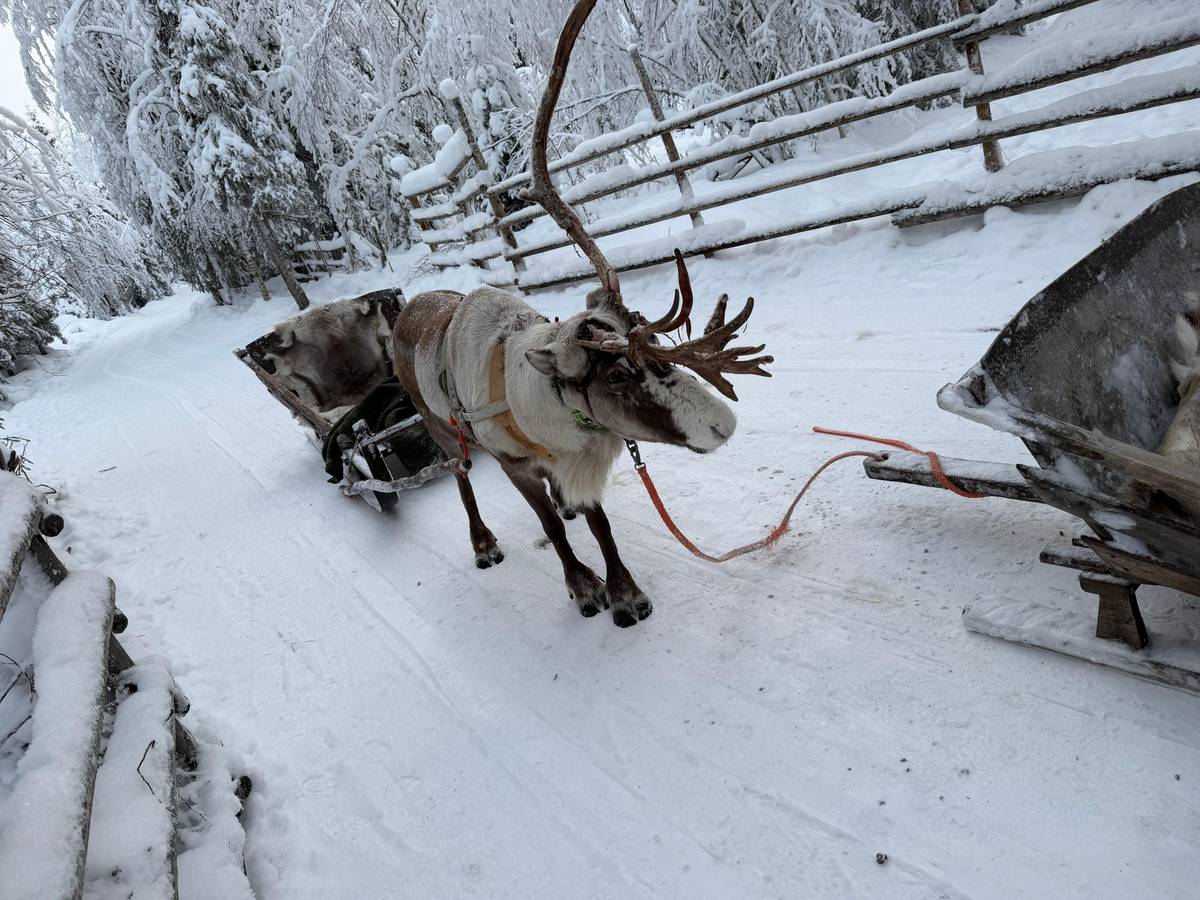
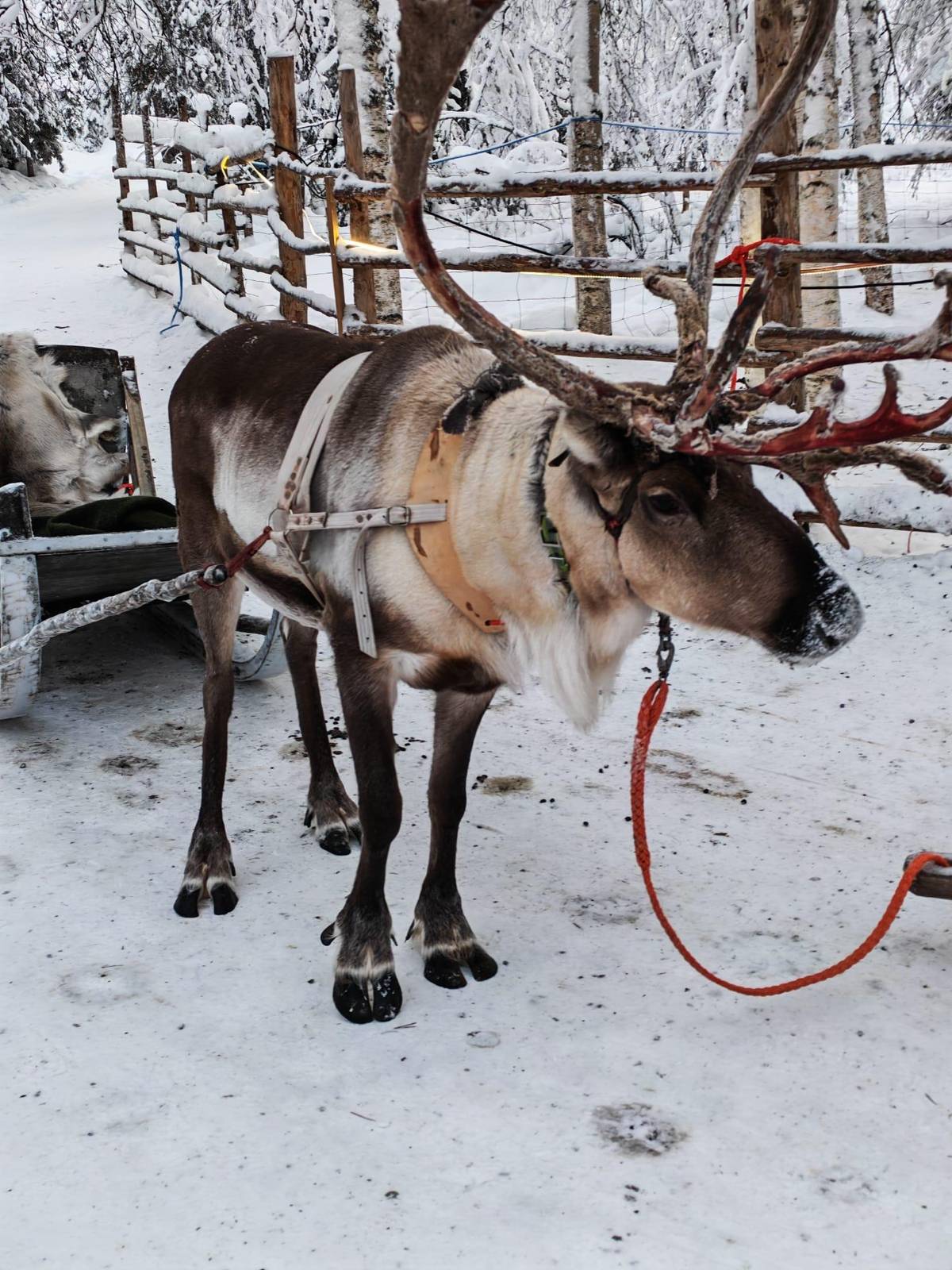
In Finland, however, reindeer husbandry is not limited to the Sami. The rearing area covers 122,936 km² and therefore a large part of the country.7 Every animal in it belongs to an owner.10 So if you see reindeer on a farm near Rovaniemi, you are experiencing a tradition that Sami and Finns in the north share, but each live in their own way.
Checklist
Travel with respect
01
Before booking
- Ask who runs the farm
- Be skeptical of costumes and ceremonies
- Read reviews about the culture
02
On site
- Listen instead of explaining
- Photograph people only with their consent
- Buy crafts with a known origin
Video
The Sámi, their reindeer, and their life in the north
The video loads only after you tap Play.
What the Sami Parliament expects from visitors
The Sami Parliament in Finland has published ethical guidelines for tourism. Their primary goal is to put an end to tourism that exploits Sami culture and to eliminate false information about the Sami that is spread through tourism.9 That is a clear message to operators who profit from the culture without belonging to it.
For you as a guest, that means in practice: be skeptical if a tour advertises costumes, ceremonies, or rituals that look like a show. A guide in colorful dress who is not Sami has little to do with genuine culture. Such offers may seem entertaining, but they spread exactly the images the Sami are fighting against.
Genuine encounters are quieter. A herder who tells stories about their family, a tour that openly says who runs it and where the knowledge comes from, a museum with careful explanations: these are good signs. If you are unsure, just ask. A reputable operator can tell you whether they are Sami themselves and how they engage with the culture.
Tours with a Sami connection from Rovaniemi
The tour that fits this guide is a reindeer safari with sleigh ride that carries the Sámi Heritage name. It lasts 3 hours, is limited to 8 guests, and costs from $230. Pickup is included, the guide speaks English. Guests rate it 4.50 out of 105 reviews, the guide 4.6.
Another option is a visit to a Sami reindeer farm with a sleigh ride. It lasts 2 hours and starts from $139. Guests rate it 4.06 out of 87 reviews. For both tours: read the description carefully and ask the operator who runs the farm and what you will learn about the culture. A reputable operator will answer such questions gladly and openly, and the answer tells you a lot about the tour before you even book it.
If you prefer visiting a farm without a cultural promise, you can find a visit with a walk and an insight into local life, led in Finnish, English, and German. It lasts 2 hours and is limited to 10 guests. Here you will learn a lot about local reindeer herding without a foreign culture serving as a backdrop.
Understanding the Reindeer Year
If you want to understand the role of reindeer, you should know the animals' year. In spring the calves arrive: most are born in May, some still in June.4 After that, the herds move through forests and fells, and the herders follow their paths, often over great distances.
At certain times of the year, the animals are gathered together. The herders bring smaller groups together with larger herds and then into enclosures, on foot, by motorcycle, quad, and helicopter.5 This is hard, shared work, and it brings families and neighbors together. If you visit a farm, feel free to ask when this happens for that family and whether guests are allowed to watch.
In winter, reindeer dig lichen out from under the snow and also eat twigs, hay, and beard lichen.6 If you come to a farm in winter, you will often see the herders helping with fodder. Feel free to ask how life with the animals has changed over the past decades, because climate and land use are raising new questions for reindeer herding.
Ask Respectfully, Listen, Buy
A respectful visit starts with listening. Let them tell you how things are in the North, rather than explaining it yourself. Ask open questions and accept if someone does not want to talk about something. Photograph people only if they have agreed, and on a farm, ask before photographing animals or objects. Many questions that visitors consider harmless are ones a herder has heard countless times before. An honest, personal question often opens more doors than a general one.
Avoid putting on traditional clothing just for fun if it is offered to you as a costume. Sami clothing is not a carnival costume, and treating it as such hits a nerve. Admiring and asking questions, on the other hand, is always fine.
And if you want to buy something, do so with intention. Genuine handicraft has its price because it takes time and skill. Cheap souvenirs with Sami motifs that were mass-produced somewhere do not benefit the Sami people. A small, authentic piece whose origin you know is a more meaningful keepsake of your visit to the North.
Book the tour
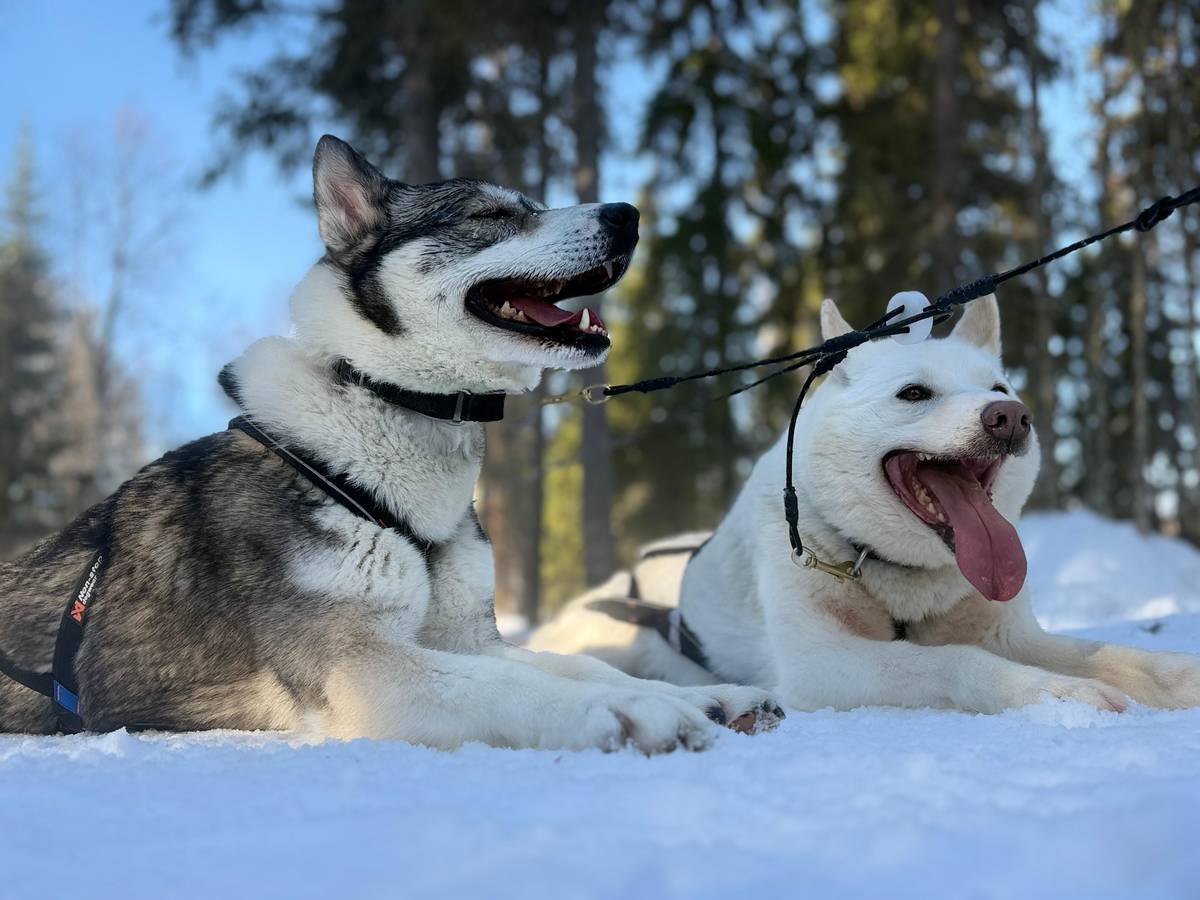
Reindeer, huskies, and the Arctic Circle in one day.
Book now, pay later, and cancellation remains free of charge up to 24 hours before.


You ask,we answer.
Who Are the Sami?
The only indigenous people in the EU. Their status as an indigenous people is enshrined in the Finnish constitution.1
Is Rovaniemi in the Sami Homeland?
No. The Homeland comprises Enontekiö, Inari, Utsjoki, and northern Sodankylä.2
Is Every Reindeer Farm a Sami Farm?
No. Reindeer are also kept outside the Sami Homeland. Ask the operator who runs the farm.
What Role Do Reindeer Play for the Sami?
A central one. Reindeer herding is one of the important cornerstones of Sami culture.3
What Does the Sami Parliament Want from Tourists?
No exploitation of culture. Its guidelines aim to end exploitative tourism and false information about the Sami.9
How Much Does the Tour with Sami Heritage Cost?
From $230. It lasts 3 hours and is limited to 8 guests.
May I Photograph Sami People?
Only with their consent. Always ask first. This applies to people, their animals, and their belongings.
Sources
Where the information comes from
- 1The Sámi Parliament of FinlandAbout us | The Sámi Parliament of Finland↩
- 2The Sámi Parliament of FinlandAbout us | The Sámi Parliament of Finland↩
- 3Sámi tourismResponsible Tourism in Sámi Homeland↩
- 4Reindeer Herders' AssociationReindeer and spring - Reindeer Herders' Association - Reindeer↩
- 5Reindeer Herders' AssociationAutumn - Reindeer Herders' Association↩
- 6Reindeer Herders' AssociationSnow and Digging - the Winter of the Reindeer↩
- 7Reindeer Herders' AssociationReindeer herding - Reindeer Herders' Association↩
- 8Arktikum Science Center & MuseumVisit - Arktikum Science Center & Museum - Rovaniemi↩
- 9The Sámi Parliament of FinlandEthical Guidelines for Sámi Tourism↩
- 10Visit FinlandWhere can I see a reindeer in Finland?↩
Read more